Can Guinea Pigs Eat Raspberries? Safe Amounts, Benefits and Risks
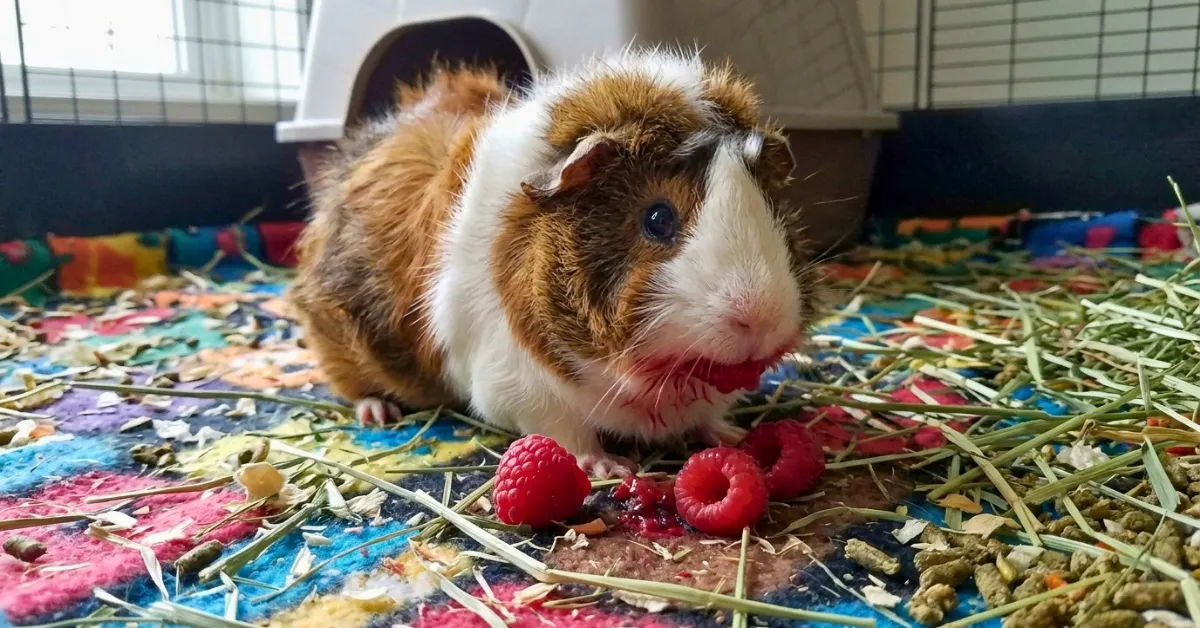
Yes, guinea pigs can eat raspberries. Fresh raspberries are safe as an occasional treat in small amounts.
The safe portion is about one to two raspberries per serving, offered no more than two or three times a week.
Raspberries are not a substitute for hay, vegetables, or vitamin C-fortified pellets.
I share my home with guinea pigs, and raspberries are one of the treats I feel most comfortable offering. They are lower in sugar than many other fruits, they contain vitamin C, and my guinea pigs love them.
Still, “safe” does not mean “unlimited,” and the details matter. Below, I explain exactly how much to give, how to prepare them, and what to avoid.
Quick Reference: Raspberries for Guinea Pigs
| Question | Answer |
|---|---|
| Safe to eat? | Yes, fresh raspberries in moderation |
| Serving size | 1 to 2 raspberries per adult guinea pig |
| How often | Up to 2 to 3 times per week, not daily |
| Best form | Fresh, washed, or fully thawed frozen |
| Avoid | Dried raspberries, jam, sweetened yogurt, raspberry candy |
| Leaves | Can be offered if pesticide-free, in small amounts |
Serving guidance varies between sources, and the amounts above are the cautious, commonly used ones. If your guinea pig has a health condition, follow your vet’s advice instead.
Are Raspberries Safe for Guinea Pigs?
Yes. Guinea pigs are herbivores, and fruit is a normal, acceptable part of a varied diet in small amounts. Raspberries contain no ingredients toxic to guinea pigs. The concern is not poison. The concern is quantity.
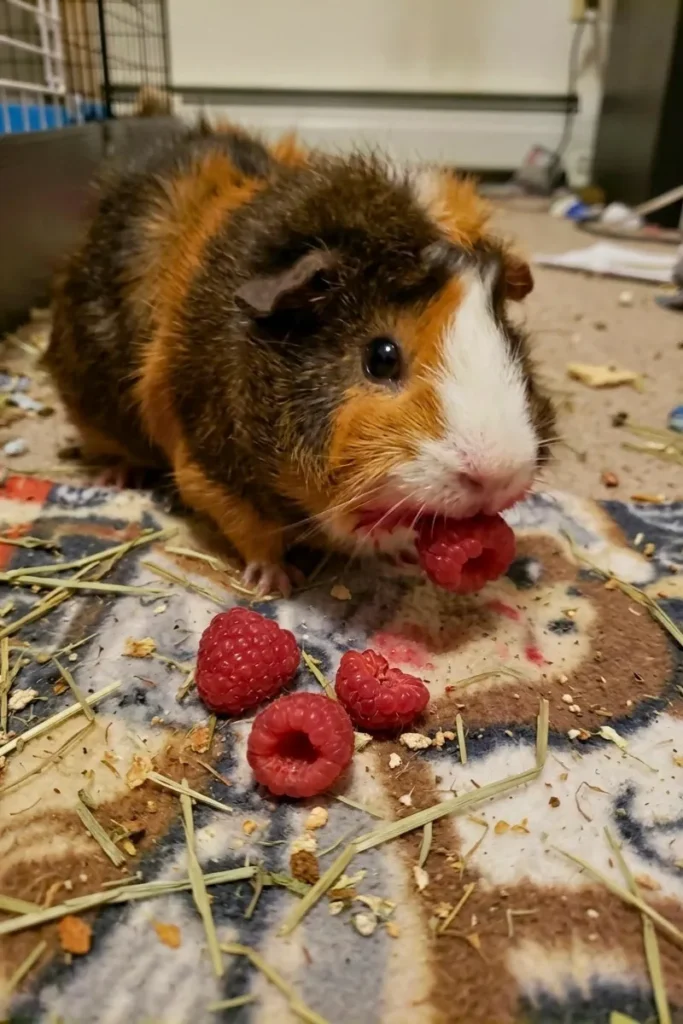
A healthy guinea pig diet is built in this order:
- Unlimited timothy hay (or another grass hay), available at all times
- Fresh vegetables daily, such as bell pepper and romaine lettuce
- A small amount of fresh, vitamin C-fortified pellets
- Fruit as an occasional treat
Raspberries belong in the last category. When I offer one, I think of it as a reward, not a meal.
Nutrition and Benefits of Raspberries
Vitamin C
Guinea pigs cannot make their own vitamin C (ascorbic acid), just like humans. They must get it from food every day, and a shortage leads to scurvy.
Raspberries contain vitamin C, so they contribute a little.
I want to be honest here, though: one or two raspberries provide only a small amount. Raspberries contain roughly 26 mg of vitamin C per 100 g, and a single berry weighs only a few grams.
That means each berry adds around 1 mg. Daily requirements are commonly cited as roughly 10 to 30 mg for an adult, with more needed during pregnancy or illness, so confirm the right amount for your animal with your vet.
Raspberries are a nice extra, but they are not how I meet my guinea pigs’ vitamin C needs.
Fiber and antioxidants
Raspberries are relatively high in fiber for a fruit and contain antioxidant compounds such as anthocyanins and ellagic acid.
These are real nutrients, but I do not claim raspberries “boost immunity” or “prevent disease” in guinea pigs, because there is no solid evidence for that.
Hay remains the main fiber source your guinea pig needs.
Vegetables are still the better vitamin C source
Bell pepper is an efficient, low-sugar way to give vitamin C, and it is what I rely on every day. Fruit adds variety and enrichment. Vegetables do the heavy lifting.
Risks of Feeding Too Many Raspberries
Sugar, diarrhea, and digestive upset
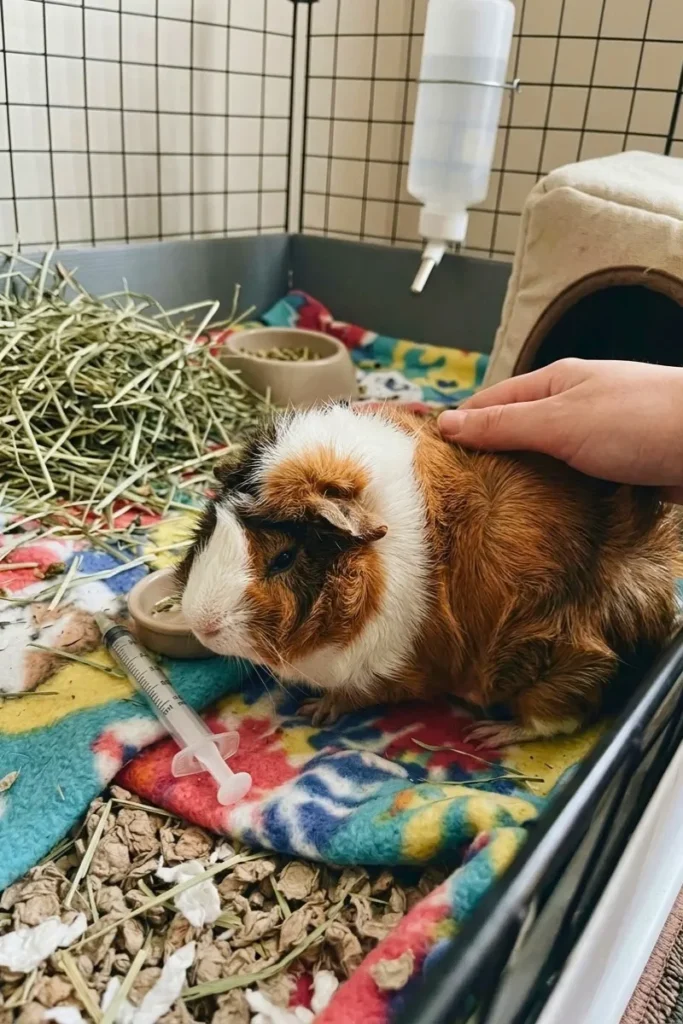
Raspberries are lower in sugar than fruits like grapes or bananas, but they still contain fructose. A guinea pig’s gut is sensitive, and too much fruit can cause soft stools or diarrhea.
The gut flora that digests hay does not handle sudden changes or sugary loads well.
Obesity and dental concerns
Sugary treats add calories without the chewing benefit of hay. Over time, too many treats can contribute to obesity.
Guinea pigs’ teeth also grow continuously, and hay is what wears them down. Treats should never crowd out hay.
Pesticides
Store-bought raspberries often carry pesticide residue. I wash every berry under running water before serving, and I choose organic when I can. Raspberries are delicate, so rinse gently.
How Much Raspberry Can a Guinea Pig Have?
| Guinea pig | Serving | Frequency |
|---|---|---|
| Healthy adult | 1 to 2 raspberries | Up to 2 to 3 times per week |
| Weaned young guinea pig | A tiny piece to start | Rarely, and only after vet or breeder guidance |
| Guinea pig with health issues | Ask your vet first | As directed |
If your guinea pig eats several fruits in a week, count them together. Raspberries plus strawberries plus blueberries add up, so I keep total fruit small.
Introduce raspberries gradually
Never add a new food in a large amount. I offer a small piece first, then watch for 24 hours.
If the droppings stay normal, the appetite stays strong, and the behavior stays lively, I can offer the normal serving next time.
If you see soft stools, stop and go back to hay and familiar vegetables.
How to Prepare and Serve Raspberries
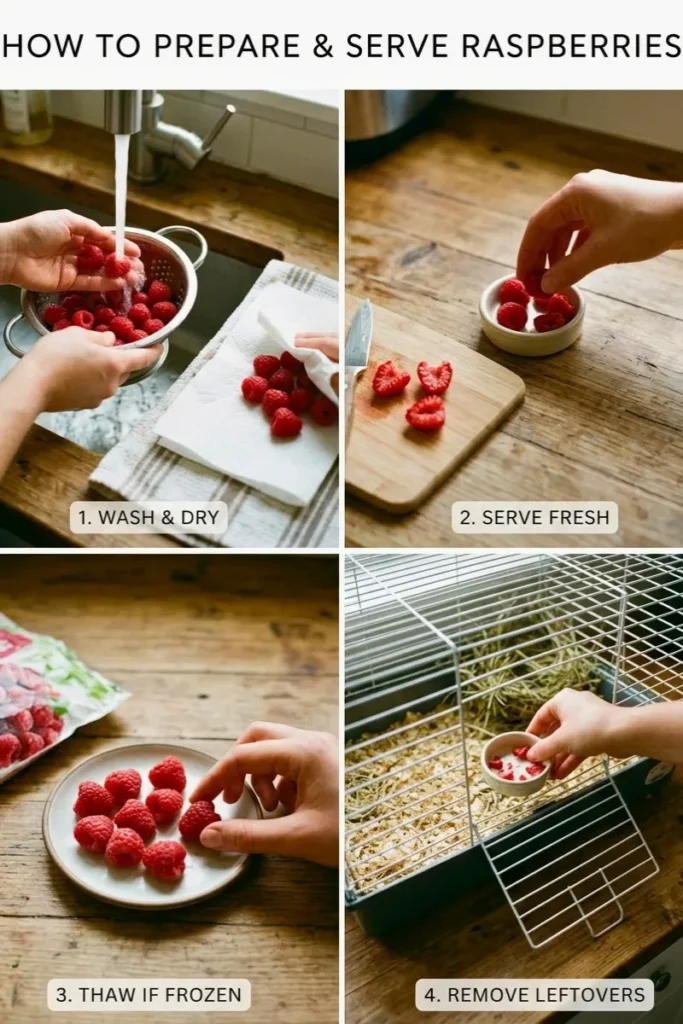
Wash them. Rinse under cool running water and pat dry.
Serve fresh, whole, or halved. The seeds are tiny and are not a concern. I do not remove them.
Frozen raspberries are acceptable if fully thawed. Serve them at room temperature. Icy-cold fruit is harder on a small digestive system, and frozen berries turn mushy, which makes a mess.
Remove leftovers. Take uneaten fruit out of the cage after a few hours so it does not spoil.
Avoid dried and processed raspberry products
Dried raspberries are concentrated sugar. Jam, sweetened yogurt, raspberry syrup, candy, and baked goods contain added sugar and other ingredients that do not belong in a guinea pig’s diet.
Only plain fresh (or thawed) fruit is appropriate.
Raspberry Leaves, Seeds, and Other Parts
Raspberry leaves are often listed as an acceptable occasional green for guinea pigs, but guidance is less consistent than for the fruit.
If you offer them, they must be pesticide-free, ideally from a plant you grow yourself without chemicals, and given in a small amount at first.
Never pick leaves from roadsides or sprayed gardens. I do not use raspberry leaf teas or supplements for guinea pigs.
Seeds are small and part of the fruit, so eating them is not a problem.
Special Cases
Baby guinea pigs: Pups eat hay early, but their digestive systems are delicate. Wait until they are weaned and eating solids reliably, then introduce only a tiny piece.
Pregnant or nursing sows: Their nutritional needs are higher and more specific. Ask a vet about diet rather than adding treats on your own.
Guinea pigs with bladder stones, obesity, or digestive problems: These animals need individual dietary advice. Please check with an exotics vet before feeding fruit.
Other Berries Guinea Pigs Can Eat
Blueberries, strawberries, and blackberries are commonly fed to guinea pigs in the same small, occasional way.
They differ in sugar, acidity, and oxalate content, so I do not treat them as interchangeable.
Rotate treats instead of feeding the same one repeatedly, and keep the total portion small.
What to Do If Your Guinea Pig Eats Too Many Raspberries
If your guinea pig eats extra raspberries, stay calm. Remove the fruit, provide plenty of hay and fresh water, and watch closely. Mildly soft droppings can settle within a day.
Call a vet promptly if:
- Diarrhea continues for more than a day
- Your guinea pig stops eating or drinking
- Droppings stop or become very small
- Your guinea pig is lethargic, hunched, or bloated
Guinea pigs hide illness, and digestive problems can become serious quickly. When in doubt, contact an exotics vet.
FAQ
Can guinea pigs eat raspberries every day?
No. Because of the sugar, raspberries are an occasional treat, not a daily food for the guinea pigs.
Are raspberries good for guinea pigs?
In small amounts, yes. They provide some vitamin C, fiber, and antioxidants, and most guinea pigs enjoy them. They are a supplement to a hay-based diet, not a health food.
Do raspberries have enough vitamin C for guinea pigs?
No. They contribute only a small amount. Daily vegetables such as bell pepper, plus fortified pellets, cover the requirement.
Can guinea pigs eat frozen raspberries?
Yes, if fully thawed to room temperature and unsweetened.
Can guinea pigs eat dried raspberries?
No. They are too high in concentrated sugar.
Can guinea pigs eat raspberry leaves?
They can in small amounts if pesticide-free, though the guidance is less consistent than for the fruit.
Should I wash raspberries first?
Yes, always, to remove pesticide residue and dirt.
Can baby guinea pigs eat raspberries?
Only a tiny piece, and only after they are weaned and eating solids well.
The Bottom Line
Raspberries are a safe, enjoyable treat for guinea pigs when you keep them small and occasional.
Offer one or two fresh, washed berries a couple of times a week, introduce them gradually, and keep hay, vegetables, and fortified pellets at the center of the diet.
If you ever notice changes in droppings or appetite, stop the treat and call your vet.

Hi, I’m Amelia, the guinea pig owner behind Guinea Pig Care Facts. I write simple, practical guides on feeding, housing and everyday care, based on how I care for my own guinea pigs.